
Your relationship with your skin is complicated – I get it. One day, it’s clear; the next, you’re cursing an invasion of angry blemishes. Again.
If you’re like me, stress, diet, and hormones wreak havoc on your dewy complexion at the worst times. Ugh. So, what to do?
The good news is that I’ve been there and am here to help!

Whether you suffer from occasional breakouts or have a long-term relationship with clogged pores, there are steps you can take to achieve radiant, healthy skin.

Today, let’s talk about one particular offender: sebaceous filaments. Sebaceous what? Good question.

What are Sebaceous Filaments?
Sebaceous filaments, called keratosis pilaris, are buildups of skin debris, bacteria, and sebum produced from sebaceous glands around hair follicles. They usually appear white, yellow, or gray and look like tiny plugs. They are mainly formed on oily areas like the forehead, nose, chin, and sometimes on your back.
It’s important to note that sebaceous filaments are regular. We all have them, and unlike blackheads, permanently eliminating them is unnecessary (or possible).
Still, if they are apparent and bother you, you can take steps to reduce them.
But first…Do I have blackheads or sebaceous filaments?
An apparent difference between blackheads vs. sebaceous filaments is color.
Grab a mirror. Do the dots appear white, yellow, or light gray? If so, they are probably sebaceous filaments.
Blackhead appears when dead skin cells, sebum, and bacteria collect inside the skin pores and hit its surface. As a result, either the clogged pore remains open, oxidizes, and results in a black head, or the skin covers it and produces whiteheads.
Both blackheads and sebaceous glands are common in oily skins with enlarged pores.
Unlike a pimple, gently squeezing a sebaceous filament will produce a string of gunk. Tempted? Not so fast! This can damage your pores. This brings us to…
Be nice to your pores! (They are doing their best.)
While squeezing or picking at sebaceous filaments to eliminate them may be super satisfying, try to resist the urge. Seeing impurities come out may seem productive, but it can lead to irritation or (worse!) scarring.
OK, So How Do I Get Rid of Them Safely?
Let’s get to it. Here are the top 5 methods I recommend to beat sebaceous filaments, starting with my favorite!
Oil Cleansing

Won’t oil clog my pores? I was skeptical at first, too. But the answer is…no.
When you use harsh, chemical-laden products, the skin is stripped of its natural oils and produces excess oil to compensate. (Yes – “oil-free” products make your skin greasier !)
In comparison, oil cleanser gently cleans the skin, dissolving hardened oil and impurities lodged in large pores, treating sebaceous filaments effectively.
What you will need:
- Castor Oil
- Olive, Sunflower, or Hazelnut Oil
- Clean washcloth
Step #1. Blend your oils. I find 1 part castor oil to 2 parts olive oil works best for my skin, but some people prefer sunflower or hazelnut instead of olive. Start with small amounts and experiment!
Step #2. Wet face with warm water and pat primarily dry—no need to remove makeup first, as this process will naturally remove it.
Step #3. Massage oil into the skin in a gentle, circular motion.
Step #4. Run a washcloth under hot water. Give the steam time to open your pores – about a minute.
Step #5. Rinse the washcloth, then gently wipe away excess oil. You may notice a thin remaining layer of oil – this will wonderfully moisturize and protect your skin!
Note: Many people repeat morning and night. I only oil cleanse at night and gently rinse with warm water in the morning. Remember, you want to maintain balance, so less is more!
Give your skin up to three weeks to adjust to this new regimen. It is normal to see a brief breakout increase before you see improvements. Power through – it’s worth it!
Read more about how to oil cleanse here.
Face Masks

A suitable face mask can work wonders for your skin and is a great excuse to snag some “me” time. Charcoal, kaolin clay, and even honey can remove sebaceous filaments by dissolving sebum plugs and drawing out those unwelcome filaments. So let’s take them one at a time.
Clay Mask
Clay is excellent for sebaceous filament removal as it is super absorbent, which makes it a great choice for cleaning clogged pores. It works by soaking up sebum, dirt, oil, and other debris, drawing them safely out of your pores.
The best part is that you can feel it happening. As the clay dries on your skin, you will experience a tightness that lets you know it’s working.
What you will need:
- Clay mask
- Apple cider vinegar or water
- Clean washcloth
Step #1. Mix 1 part clay to 1 part apple cider vinegar or water (either will work) until paste forms.
Step #2. Add more liquid or clay until you reach the desired consistency.
Step #3. Apply a thick coating of the mixture to your face.
Step #4. Allow drying for 5-20 minutes. If you have sensitive skin, less time is better.
Step #5. Gently rinse with warm water.
Note: Never scrub with a washcloth, as this can irritate your face’s fragile skin. Instead, hold a warm, damp cloth to your face to soften the clay, then gently wipe clean.
Charcoal Mask
The boy is charcoal trendy these days! We see it everywhere: in soaps, shampoos, face wash – you name it. But there’s a reason for its popularity.
Similarly to clay, charcoal has unique binding properties that allow it to attach to toxins and dirt, drawing them out of your pores—making it a great substance to remove sebaceous filaments.
When I use charcoal products, my skin always feels soft and clean. I’m a fan!
What you will need:
- Charcoal mask
- Clean washcloth
Step #1. Run a washcloth under hot water, then ring out until damp.
Step #2. Hold cloth against the face to gently open pores.
Step #3. Spread a thin layer of the mask evenly onto the face.
Step #4. Leave on until dry.
Step #5. Rinse off.
Turmeric Honey Mask

Want a cheaper option? No problem! Did you know that some of the most powerfully healing skin products are FOOD?
It’s true. Since what you apply to your skin absorbs into the bloodstream, why would you put anything on your skin that you wouldn’t also eat?
Stay in your pajamas for this mask, and look no further than your kitchen.
What you will need:
- Turmeric powder
- Rice or chickpea flour
- Yogurt or Milk (I recommend full fat)
- Olive, Coconut, or Almond Oil
- Honey (raw, unprocessed is best)
- Lemon (optional)
Check out the full instructions by Promise Phan
Mineral Oil

As you now know, harsh skin products strip the skin of its natural moisture, leaving it dry. This dryness promotes excess oil production to compensate, kicking off the vicious cycle that can increase dermatological issues such as sebaceous filaments.
Applying mineral oil is A simple step to maintain your skin’s moisture!
There are many products out there, but I like to use a toning spray. It’s delicate yet delivers the moisture my skin desperately needs to stay balanced.
| Mineral oil
|
|---|

Step #1. Apply to face
Step #2. Repeat daily
4. Professional Extractions

You may want to try galvanic desincrustation if you have very oily skin. It’s not as scary as it sounds – promise.
This professional cleansing method uses a gentle current to create a chemical reaction that softens sebum and extracts blockages. While you can purchase the equipment to do this yourself at home, it is best done by a professional.
Best of all, the entire process takes less than 10 minutes. You can repeat it every couple of weeks or monthly.
Beta Hydroxy Acid (BHA)

You’re familiar with a common BHA if you’ve heard of salicylic acid.
Alpha and beta hydroxyl acids, found in many popular skin care products, are believed to have acne-fighting and pore-cleansing properties.
While alpha hydroxy acids are water soluble, beta hydroxy acids are oil soluble, allowing them to penetrate the skin through sebaceous follicles. This makes BHA a better and gentler choice for those with oily skin.
What you will need:
| BHA liquid exfoliant
|
|---|
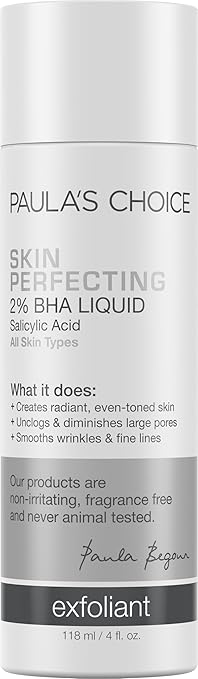
Step #1. Apply a small amount to the face, being careful to avoid eyes.
Step #2. Do not rinse.
Step #3. Just kidding. That’s it!

And there you have it – my top 4 favorite methods for removing sebaceous filaments! I hope you enjoyed reading it.
I will leave you with this parting piece of advice, which I can’t emphasize enough…
LISTEN TO YOUR SKIN! There is so much noise about skincare, and it’s easy to get confused and overwhelmed. I know that’s how I felt.
Your skin is unique. It will tell you what it does and does not like.
What works for someone else may not work for you, and that’s OK! If you notice excessive redness or breakouts after a few weeks, try something different – it may not be the best method for YOU.
Questions, comments? We’d love to hear from you below!
And if you found these tips helpful, feel free to spread the knowledge by sharing this article!
Try one of these techniques and good luck! Your skin will thank you.
FAQ
Can I get rid of sebaceous filaments?
Although these are permanent, you can minimize them by opting for the measures we have suggested in your routine.
Can I extract the sebaceous filament at home?
Yes. It would be best if you opted for a gentle approach. First, steam your face. Secondly, apply light pressure using your fingers.
Do I have to consider my nose area during cleansing?
Yes, nose pores can also retain oil, bacteria, or dirt. Press your nose gently to get as much as a cleanser during cleansing, then massage gently to remove the sebaceous filament.
Do I need to visit the dermatologist for my sebaceous filaments?
Generally, sebaceous filaments are benign, but it is better to consult a dermatologist if you have any skin concerns.
I was just searching for this info for a while. After 6 hours of continuous Googleing, finally I got it in your website. I wonder what is the lack of Google strategy that don’t rank this type of informative sites in top of the list. Generally the top sites are full of garbage.